Ashgabat, Turkmenistan
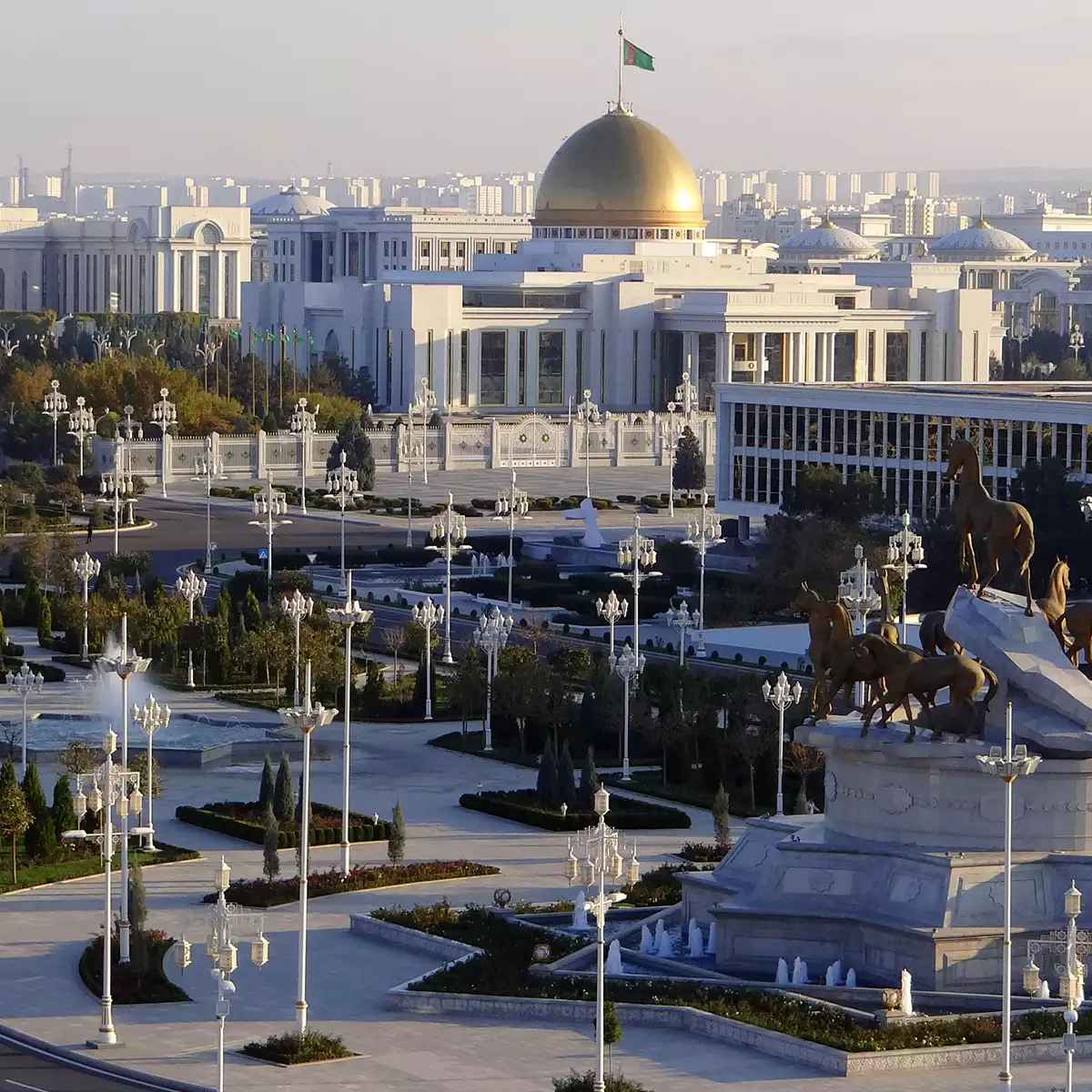
Ashgabat was reborn. Today, it is hard to imagine that ruins once lay where white marble palaces now stand. The city now features luxury hotels, ministries, and parks, while the highways against the backdrop of snow-capped mountains look like fairy-tale castles.
The soaring minarets of mosques and the original architecture of residential high-rises lend the city a unique Eastern atmosphere. The capital has become even more beautiful and modern, transforming into the largest city in the republic.
Industry is actively developed here, universities and institutes operate, and theaters, museums, and entertainment centers are open.
Geography
The capital is located in the southern part of Turkmenistan, occupying the territory of the Akhal Oasis. The city lies in a picturesque valley: the Kopetdag mountain range towers over it from the south, while the sands of the Karakum Desert approach from the north. The area is situated at an altitude of 214 to 240 meters above sea level.
Climate Conditions
Ashgabat features a sharply continental climate. Summers here are long, very hot, and dry. The average annual temperature ranges from 12 to 17°C. January is considered the coldest month (average +4°C). The heat peaks in July, when average temperatures rise to +28°C.
Demographics and Culture
In the second half of the 20th century, the city experienced a true demographic boom, and by 2006, the population reached 660,000 people. Ashgabat is a multinational capital home to representatives of over 100 nationalities.
Turkmens make up the majority of the population (over 77%). The remaining 23% consists of other ethnic groups: Russians, Armenians, Ukrainians, and Azerbaijanis.
The state language is Turkmen (Turkic group), but Russian is still widely used in the city. In terms of religion, the majority of the population adheres to Sunni Islam.
Architectural Appearance
The center of the capital forms an impressive architectural ensemble. Key attractions include the Arch of Neutrality, crowned with a golden statue of Turkmenbashi, the Presidential Palace, and the Mejlis building. The city's cultural life is centered around the Academy of Sciences, the Mollanepes Academic Drama Theater, the National Library, and the Conservatory.
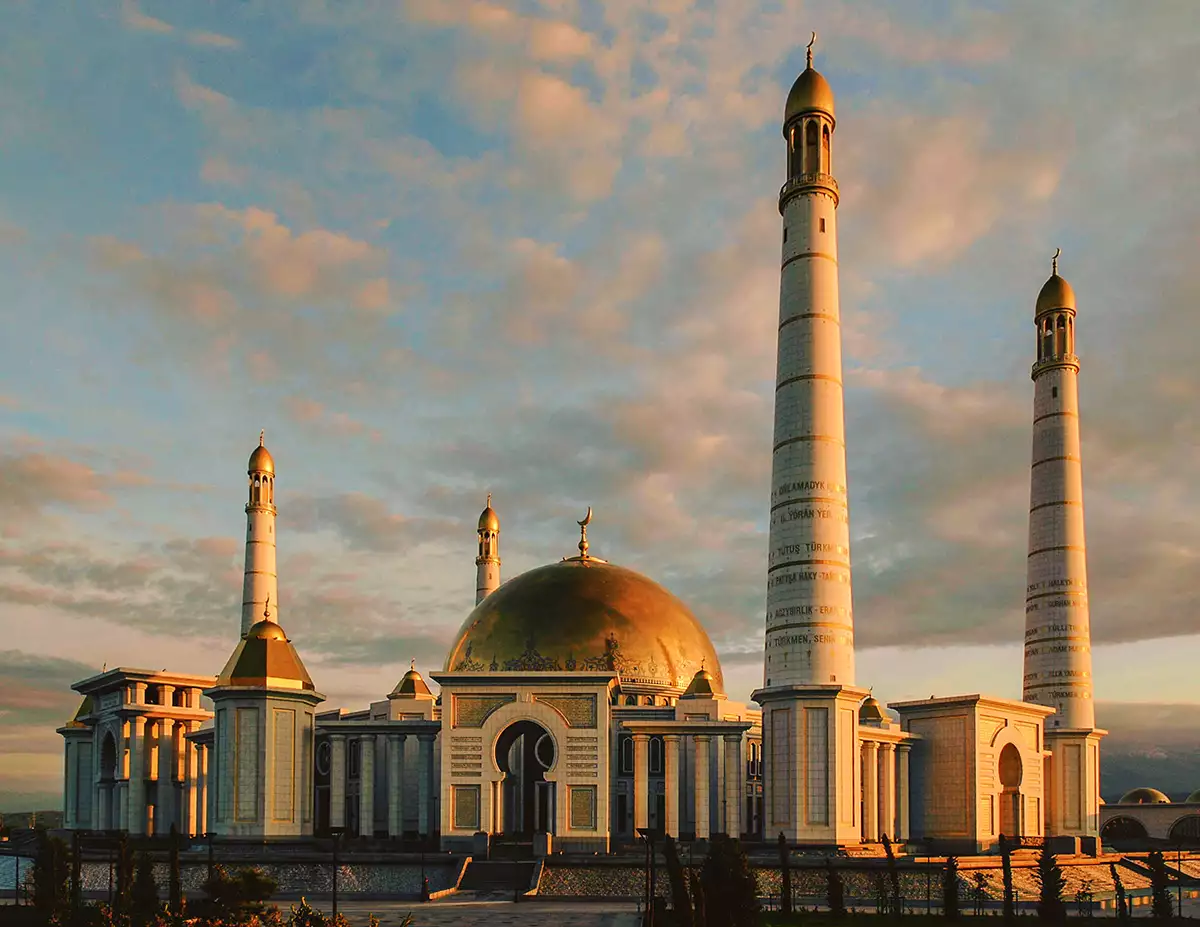
The historical and spiritual heritage is represented by the Bayram Khan monument, Lenin Square, the Mekan Palace, and the Ashgabat Circus. Religious shrines deserve special attention: the Alexander Nevsky Orthodox Church (a 19th-century monument) and the majestic Ertugrul Gazi Mosque with four minarets and a grand dome.
The main feature of modern Ashgabat is the large-scale cladding of buildings with white marble. It is this feature that gave the capital the famous slogan: "White City – Ashgabat".
Economic Potential
The foundation of the capital's economy is industry, the banking sector, and a developed trade network. The industrial complex of the city and its suburbs comprises 43 large enterprises, 128 medium-sized ones, and over 1,700 small businesses.
The economic scale is confirmed by statistics: according to expert estimates, the total gross product of Ashgabat in 2008 reached an impressive figure — about 9 billion US dollars.
Historical Roots
The most popular version of the name's translation is derived from the words "eshg" (love) and "abad" (inhabited, prosperous city). However, scholars have another hypothesis: they believe the capital's name traces back to the Persian "Ashk" — the name of a king from the Parthian Arsacid dynasty.
Geography also supports this theory: modern Ashgabat is situated just a few kilometers from ancient Nisa — the former residence of the Parthian rulers.